Enclosed ()
Enclosed () is an art installation that delves into the world of patients with locked-in syndrome and explores themes of connection, isolation, and communication. It aims to give viewers an immersive experience that conveys the challenges faced by those with locked-in syndrome.
Client
time
Feb 2024 (5 months)
TEAM
Camiel Hildenberg, Mehrag Faiz, Milan van Roessel, Pepin van Rijthoven, Joep Dols, Jules Niers, Suus bout
Role
Prototyping, Brainstorming, Fabrication, Coding
Type of work
Project footage
Exhibition photos


Artist statement.
In our daily lives, it is sometimes easy to forget how we connect with the world around us. We use our bodies and voices to express our thoughts and ourselves. It is easy to take for granted. But what if you were to lose all this, left only to converse with yourself? Your thoughts are trapped within your own body. You still understand the world, but the world can no longer understand you.
This is the narrative of patients with locked-in syndrome, a condition where individuals become completely paralyzed, making communication impossible. enclosed () seeks to tell this story. It’s about the feeling of isolation, of loneliness.
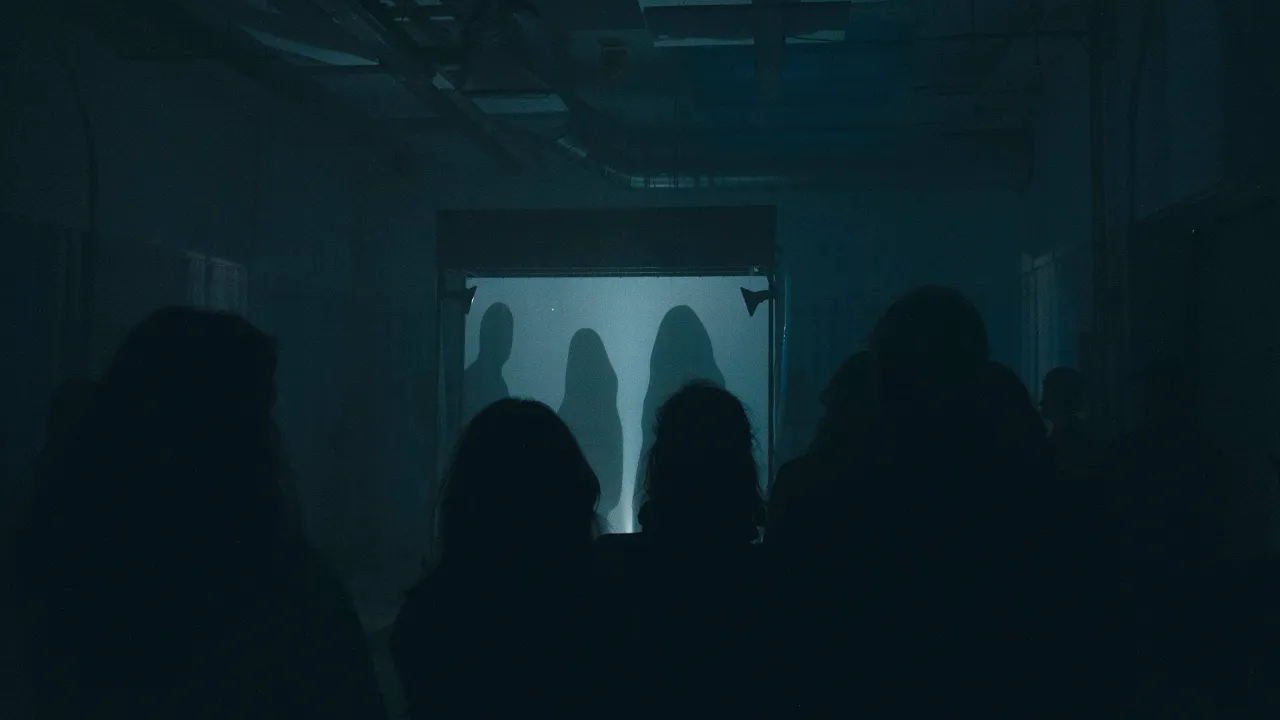
The interactive art installation aims to give viewers an immersive experience that conveys the challenges faced by those with locked-in syndrome. It conveys the difficulties of connection and the lack of expression of your inner thoughts within this art installation. The piece centers around an EEG controlled waterfall, forming a barrier between the visitor and the abstracted silhouettes that are being projected behind it.

What is Locked-in?
Locked-in syndrome is a rare neurological disorder characterised by complete paralysis of voluntary muscles, except for vertical eye movements and blinking. It is caused by stroke, traumatic brain injury, medications, or diseases that are damaging part of the brainstem. This disrupts the pathways carrying movement signals, while awareness remains intact. People with locked-in syndrome are conscious and can think, reason, and feel emotions, but cannot speak or move. Vertical eye movement or blinking is used to communicate. Over 90% of Locked-in cases result in death within 4 months. Luckily, there are patients living much longer. If the underlying cause can be treated, partial recovery is sometimes possible through rehabilitation. Locked-in syndrome profoundly impacts quality of life, as an active mind remains trapped inside a paralyzed body.
“After four hours, I was allowed to go to the room where my parents, sister, brother-in-law, and boyfriend were. But it was there that things went wrong. In the room, in the presence of everyone, I suffered a stroke. I was swiftly taken to get a CT scan, surrounded by stressful activity. Confusion and panic took over; I had no idea what was happening to me. They rushed me to the emergency room, where I tried to sit but realised my body wouldn’t respond to my commands. Then, I was given morphine and an intubation tube. From that moment, everything faded to black…” - Anne Cox (translated)
“I can only move my eyes, that realisation comes to me after two days. It feels strange, I want to lift my arm, but it doesn’t happen.”

Anne Cox: when doing the interview wearing the EEG headset
Metaphor - the Water.
Imagine a place where the inside and outside world meet, like the doorstep of a house. In our art installation, flowing water is used to symbolise this kind of fluid boundary. According to the famous psychology Carl Jung, in dreams water is seen as a symbol of the edge between:
a. what we are aware of when we are awake.
b. the deeper thoughts and feelings that we are unaware of.
Now, think of people with the “locked-in syndrome”. These individuals are fully awake but can not move or communicate because their bodies are paralyzed. Their active minds are full of life. Comparable to a dream when you know you are dreaming, but cannot wake up. The artwork uses water as a metaphor. The water moves and changes, our way of representing brain waves inside these individuals that their still bodies cannot show. A wave oscillating between reality and a dream.

A visualisation of the fluid boundary that water symbolises
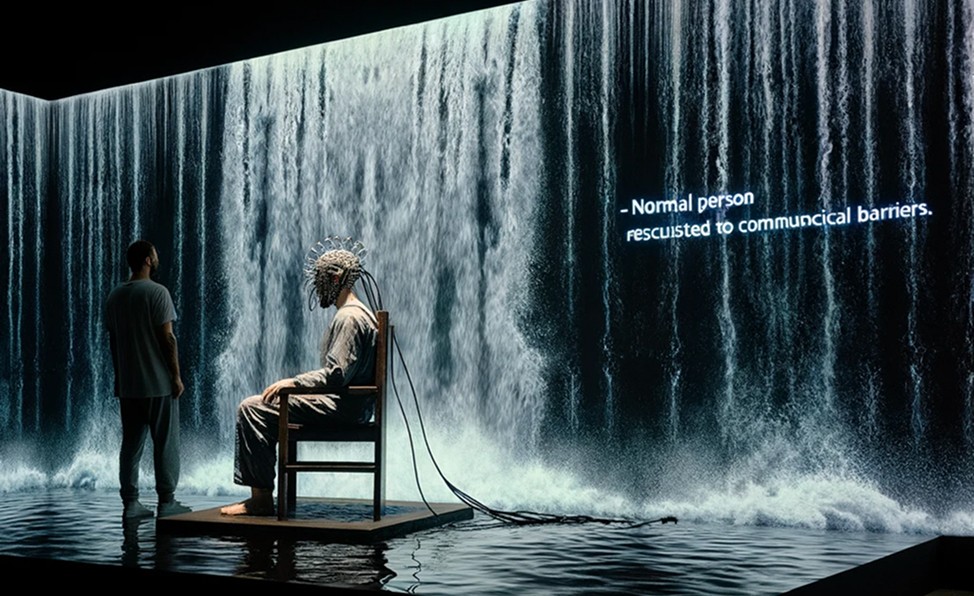
An AI-generated picture about the waterwave in the brain
Emotions to Water pattern.
The water curtain represents an obstruction, when attempting to make human connection, by an encountered barricade. Falling water blurs the projection behind it. The more the projection is blurred, the more it adds to the sense of disconnection. When talking about her experience, Anne’s emotional responses were tied to the level of connection or disconnection she felt. By varying the droplet pattern of the water curtain, these states of emotion and disconnection can be made tangible.
The objective was to identify a range of emotions experienced by Anne during her interview. To achieve this, calibration data was required that indicated Anne's brain activity patterns when she feels the following emotions: 'happy', 'sad', 'Nervous', and 'calm'. These specific emotions are selected based on the framework of Russell’s circumplex model of emotions. According to this model, each emotion can be mapped onto a two-dimensional plane, where the x-axis represents 'valence' (the degree of positive or negative emotion) and the y-axis represents 'arousal' (the level of stress or activation). Because of this, we chose to classify 4 main emotions, each of one based on a quadrant.
High Arousal, High Valence indicates a 'happy' state.
High Arousal, Low Valence suggests a 'Nervous' or 'angry' emotion.
Low Arousal, High Valence is associated with being 'calm'.
Low Arousal, Low Valence is indicative of feeling 'sad'.
When an interview answer is being played on the sound system, the water curtain state will move to the accompanying classified quartile. After the audio snippet, the water curtain will decrease the flow and move back to its ‘rest state’ with randomised droplets drizzling slowly out of the nozzles.

Russell’s circumplex model of emotions

The visualisation of how water curtain shape conveys the emotion
Brainwave and EEG.
We use the interview to evoke emotions. That’s why the interview was set up using carefully chosen questions and wording beforehand. In order to tell a story about frustration, anger, loneliness, hopefulness, helplessness, appreciation and desperation, a set of questions was made that was used as a starting point during the interview.
An EEG was used, this is a device that measures the electrical activity of the brainwave. Therefore the intention was to measure the emotional reaction of a recovered locked-in patient when they think back to certain moments regarding that period.

Helping Anna wearing the EEG headset

Visuals and audio.
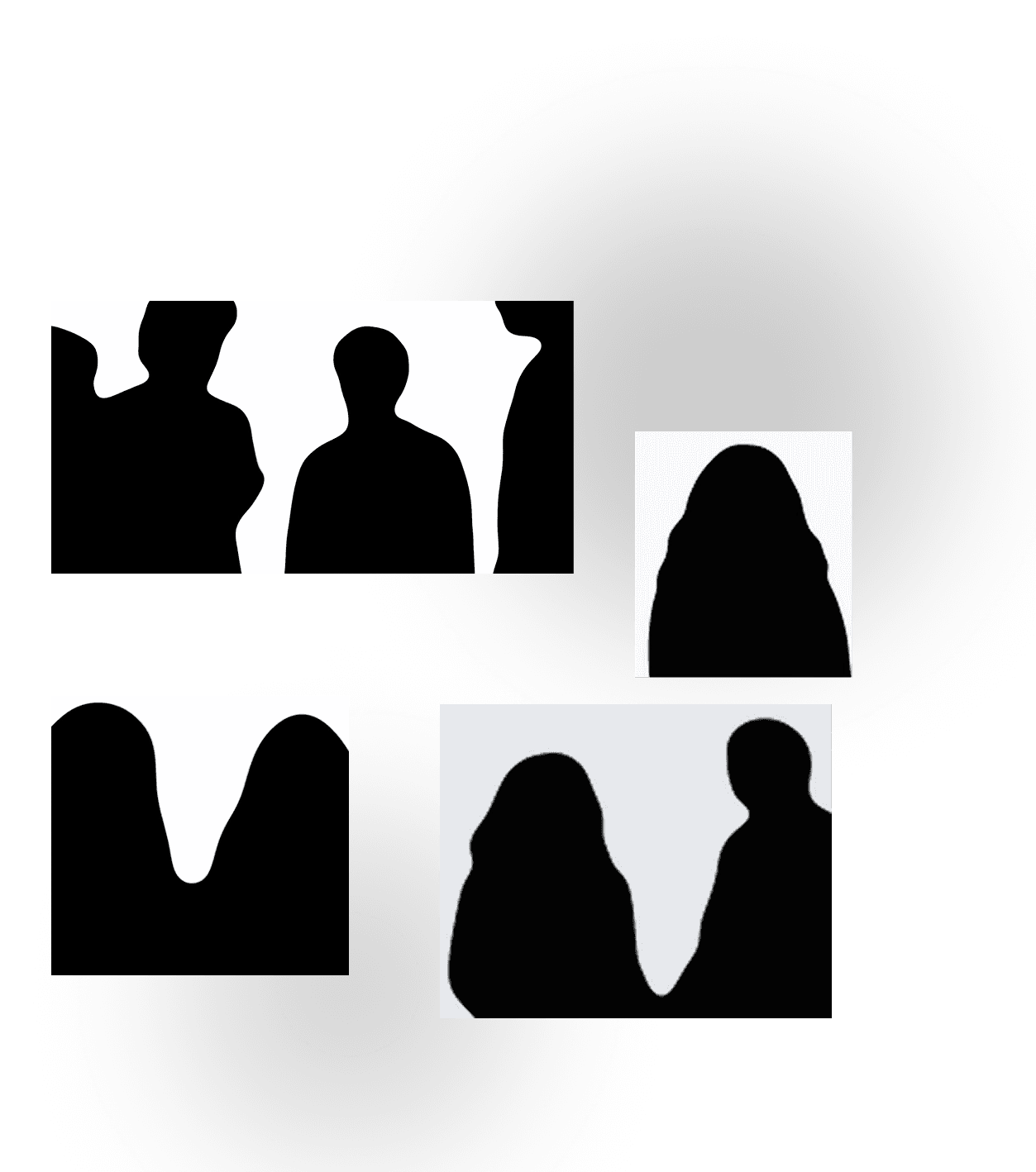
We mimicked the experience of being in a Locked-in state by using visuals to enhance the feeling of disconnection. Showing the frustrating reality of observing the world around you vaguely but have no way to interact with it. In these visuals the silhouettes of people interacting will be visible as if you are looking from the hospital bed towards your surroundings. To make this experience more intimate, the video always portrays a small group of people. These people will interact with each other leaving the first person view in the dark. These videos will correspond to the audio being played consecutively by playing with the composition, amount and nature of the interaction of the silhouettes. The core emotions identified from the interview are happiness, calmness, sadness and stress. These emotions are centralised in the visuals.
Fabrication.

From recovered locked-in patient..
"A few weeks ago I was approached by a Dream Team from the TU Delft, they were looking for someone who had experienced Locked in Syndrome. They wanted to measure my emotions with an EEG. The entire dream team came to Someren. At home I was interviewed while wearing a cap that measured my brainwaves.
Today was the exhibition! They had created a waterfall with real water, the way this water fell was the speed of my brainwaves. Behind this waterfall, shadows could be seen and you could hear my answers I gave in the interview. The rest of the room was completely dark and filled with smoke. When you walked into the room you got a 'peek into my Locked-In syndrome."
"When you see water in your dreams, this is a transition from the conscious to the subconscious."
- Anna
